

The High Street in Your Living Room: Why Connected TV Changes Everything
Connected TV is already transforming how brands reach audiences. But that's just the beginning. Here's what the future of TV advertising actually looks like — and why it's an exciting place to be.
We've been calling it 'connected TV' for a while now, as if it's a separate category — something to consider alongside TV, rather than as part of it. That framing is already outdated. Connected TV is TV. The distinction will fade, just as electric cars will eventually just be called cars, and smartphones are now just phones.
What won't fade is the transformation it's already bringing to how brands advertise.
More targeted than linear ever was
Traditional linear TV was always a broad-reach medium. You could isolate regions. You could split the country. But you couldn't target the way digital advertisers had come to expect.
Connected TV changes that fundamentally. Platforms like Sky AdSmart allow advertisers to reach micro-regions, specific demographics, even individual household types. The test-and-learn approach that digital teams have relied on for years is now available to TV campaigns — run a campaign in a focused area, measure performance, refine, scale.
For smaller and medium-sized brands, this is transformative. TV no longer requires betting a large budget on a national campaign. You can start focused, prove the model, and grow.
Less clutter, more standout
One of the underappreciated advantages of connected TV for brands is the viewing context. Someone watching a show on a streaming service has chosen to be there. They're engaged, not passively grazing. And the ad load is typically lower than linear TV — which means your brand gets more attention per ad, with less noise around it.
There's a genuine connection available between your brand and the content surrounding it. When a viewer is watching a show they love and your ad appears, the positive association carries. That's a different environment from a traditional ad break on a channel they've left on while they make dinner.
Reaching the audiences linear TV misses
Younger viewers and harder-to-reach male audiences have been moving away from linear TV for years. They're not watching less — they're watching differently. Connected TV is where you find them.
This isn't a marginal group. These are the audiences that many brands most want to reach and have found hardest to engage through traditional TV. Connected TV is the answer to that problem that linear advertising simply couldn't provide.
The high street in your living room
The longer-term transformation is even more interesting. The TV in the living room has always been the heart of the home — the shared screen, the place families gather. What's changing is what it can do.
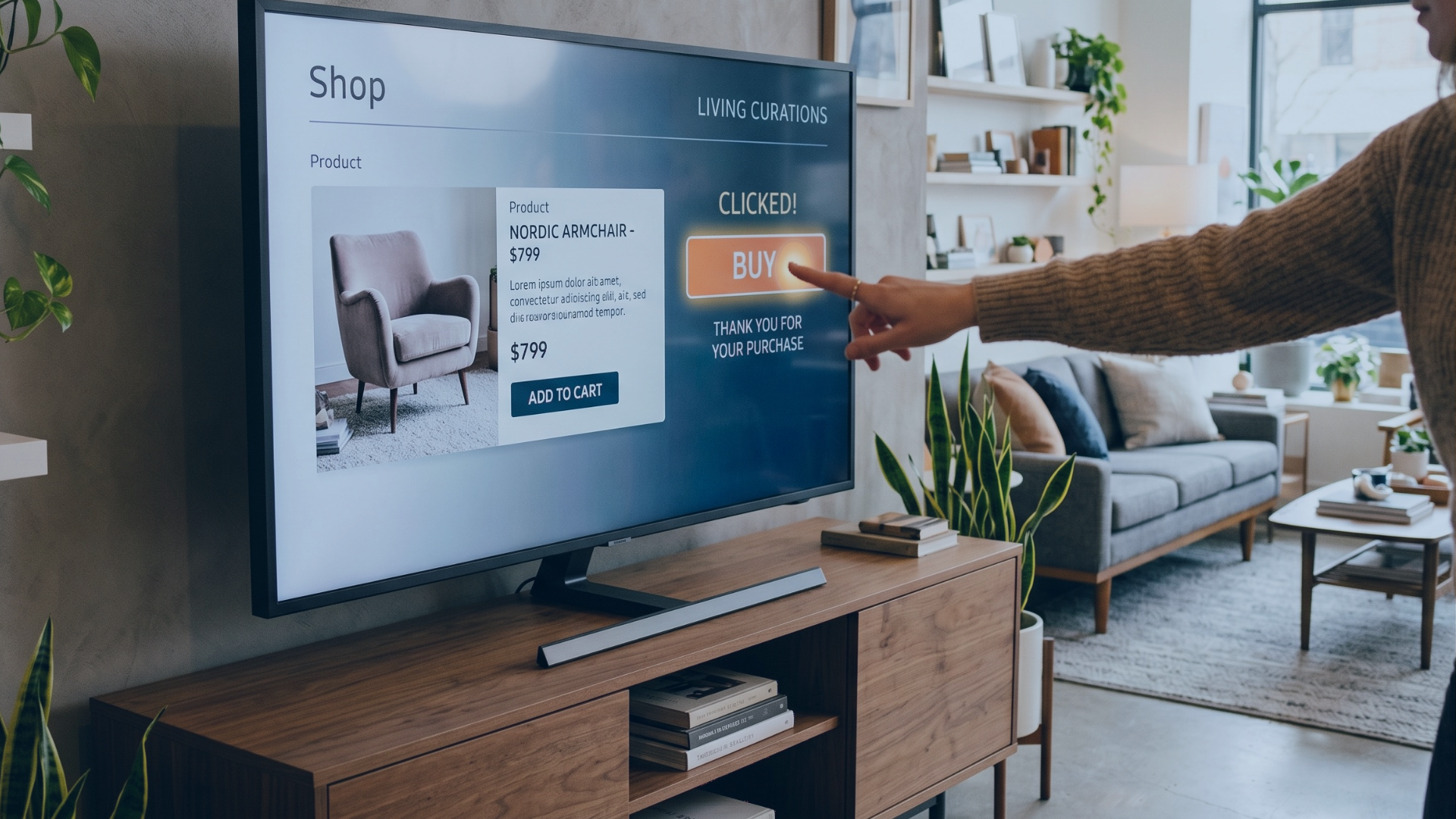
Shoppable TV is coming. QR codes are already bridging the gap between seeing and buying. Smart TVs are beginning to function as genuine shopping environments. The logical endpoint of all of this is a viewing experience where a brand appears in your favourite show, and within seconds you can browse, decide, and purchase — from your sofa, on the same screen you were just watching.
The high street moved online, but that made shopping more isolating. TV could be the middle ground — the shared, brand-rich experience that online shopping never quite became.
It's not there yet. But the direction is clear, and the brands building relationships with TV audiences now will be far better positioned when it arrives.
Why 'TV is dead' is still wrong
The 'TV is dead' narrative has been circulating for at least fifteen years. It was wrong in 2010, wrong in 2015, and it's wrong now. What's actually happened is that TV has expanded — more formats, more platforms, more ways to reach audiences, better measurement, and better targeting than ever before.
The brands that accepted the narrative and disinvested from TV have handed a genuine competitive advantage to those who stayed. The ones just entering now will find a medium that's evolved significantly — and a lot more room in the ad break than there used to be.